
Format and Predictions for the 2026 FIFA World Cup
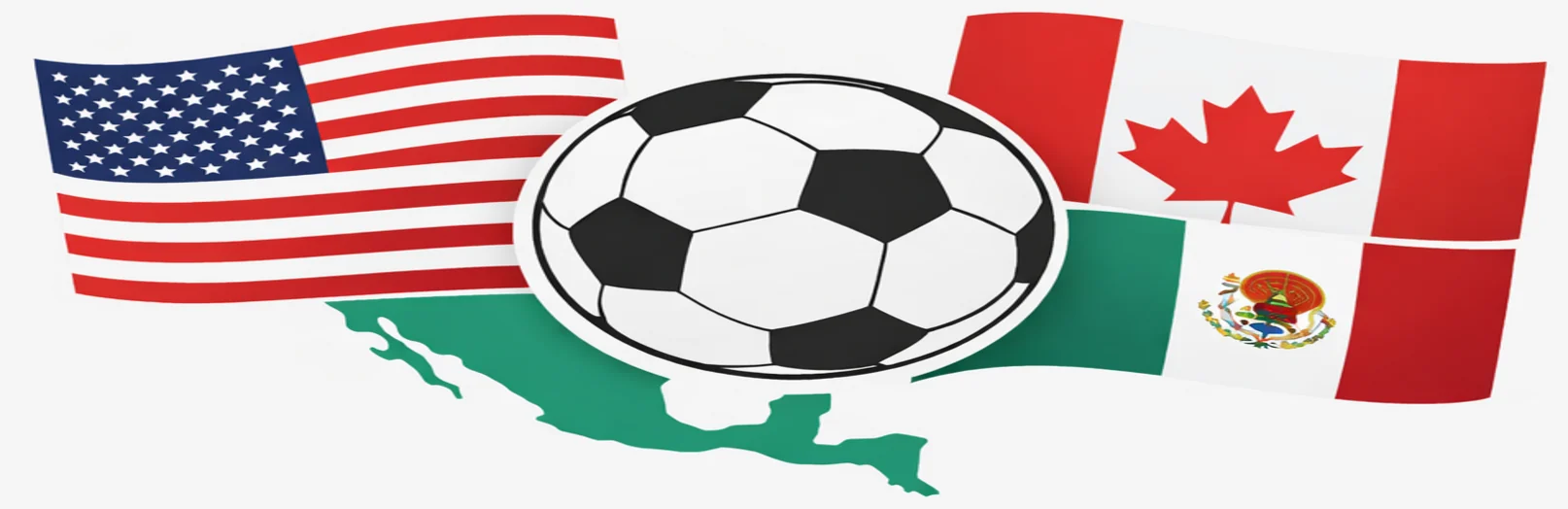
The 2026 FIFA World Cup will mark a turning point in the history of international football. For the first time, the tournament will be jointly hosted by three countries — the United States, Canada, and Mexico — spanning an entire continent. Scheduled to take place in June and July 2026, the competition will bring together an expanded field of national teams and introduce structural changes that will reshape how the World Cup unfolds.
Matches will be played across a wide range of cities, from traditional football hubs like Mexico City to newer venues in the United States and Canada. This geographic diversity reflects FIFA’s ambition to globalize the tournament further, while also leveraging North America’s infrastructure and commercial strength.
Beyond logistics, however, the real intrigue lies in how the new format will affect competition dynamics — and which teams are best positioned to take advantage of it.
The 2026 World Cup: features of the new format
The most significant change is the expansion from 32 to 48 teams. This adjustment alters both the scale and the rhythm of the tournament, introducing more matches, more travel, and more opportunities for emerging football nations.
The new structure consists of 12 groups of four teams. The top two teams from each group, along with the eight best third-placed teams, will advance to a Round of 32 — a new knockout stage.
Key features of the 2026 format include:
- 48 participating teams instead of 32
- 12 groups of four teams each
- 32 teams advancing to the knockout stage
- A total of 104 matches (up from 64)
- Extended tournament duration and broader geographic spread
This format significantly reduces the risk of early elimination for strong teams, while simultaneously increasing the chances for underdogs to progress beyond the group stage. However, it also introduces new challenges, particularly in terms of squad depth and player rotation.
Teams will need to balance intensity with endurance. Managing fatigue across potentially eight matches will become just as important as tactical preparation.
Europe vs. the Americas: chances for European teams to reclaim the title on the continent

Historically, World Cups hosted in the Americas have favored teams from the Western Hemisphere. European nations have rarely won outside their own continent, with only a few exceptions breaking the pattern.
The 2026 edition will test whether that trend still holds. European teams remain dominant in terms of depth, tactical sophistication, and club-level competition. Nations like France, England, and Spain consistently produce elite talent and have demonstrated resilience in recent tournaments.
However, playing conditions in North America could offer subtle advantages to teams from the Americas. Factors such as climate variation, travel distances, and familiarity with local environments may play a role.
South American giants — particularly Brazil and Argentina — will enter the tournament with confidence. Argentina, as reigning world champion, carries momentum, while Brazil continues to rebuild with a new generation of technically gifted players.
The key question is whether Europe’s structural advantages can outweigh historical precedent. The answer is far from obvious, but the gap between continents has arguably never been narrower.
Which teams are the favorites for the 2026 World Cup
Several national teams stand out as serious contenders, based on current squad strength, tactical identity, and developmental trajectory.
Among the leading candidates:
- France — A consistently deep squad, blending experience with emerging talent. Their ability to regenerate without losing competitiveness remains unmatched.
- England — A balanced team with strong attacking options and improved tactical maturity under Gareth Southgate (or his successor).
- Brazil — Traditionally unpredictable but always dangerous, especially if their younger players mature in time.
- Argentina — Even as Lionel Messi approaches the twilight of his career, the team has evolved into a cohesive unit capable of winning without relying solely on him.
- Spain — A technically refined side that has regained its identity, with a new generation comfortable in possession-based football.
- Germany — In transition, but historically resilient; tournaments often bring out their best.
It is also worth noting the potential of host nation United States. While not yet among the top-tier favorites, their young core — many of whom play in Europe — could make them a dangerous opponent, particularly with home support.
Prediction for the finalists and the winner of the 2026 World Cup

Predicting a World Cup two years in advance is always speculative, but certain patterns can guide expectations. Teams with stability, tournament experience, and tactical clarity tend to outperform those relying solely on individual brilliance.
France appears well-positioned to reach another final. Their squad depth allows them to absorb injuries and maintain performance levels across a long tournament. England, meanwhile, has steadily improved in knockout-stage composure and could finally take the next step.
A plausible final could see France vs. England, a matchup that reflects Europe’s current strength. Alternatively, a South American presence — particularly Argentina — could disrupt that scenario.
As for the winner, France stands out as the most complete team on paper. Their blend of athleticism, tactical flexibility, and tournament pedigree gives them a slight edge.
Which national teams could be the surprise packages of the tournament
Expanded tournaments often produce unexpected stories, and 2026 should be no different. The new format increases the likelihood of smaller football nations advancing beyond the group stage.
Several teams could exceed expectations:
- Morocco — After their historic run in 2022, they have proven they can compete with elite teams.
- Japan — Technically disciplined and tactically organized, capable of upsetting stronger opponents.
- USA — With home advantage and a young, energetic squad, they could reach the later stages.
- Canada — Rapidly improving, with a generation of players gaining experience in top European leagues.
The key for these teams will be consistency. In a longer tournament, maintaining performance levels becomes increasingly difficult, but early momentum can carry surprising sides deep into the knockout rounds.
Which players are expected to show leadership and outstanding performances during the tournament
By 2026, several established stars will be expected to take on leadership roles, both on and off the pitch.
Kylian Mbappé is likely to be at the peak of his powers, combining speed, technical skill, and a growing sense of responsibility. For England, Jude Bellingham has already emerged as a central figure, capable of influencing matches in multiple phases of play.
Brazil may look to Vinícius Júnior to lead their attack, while Argentina’s leadership structure could evolve beyond Messi, with players like Enzo Fernández and Julián Álvarez stepping forward.
In midfield, players such as Pedri (Spain) and Jamal Musiala (Germany) represent the modern archetype — technically gifted, tactically intelligent, and capable of dictating tempo.
Leadership in 2026 will not only be about individual brilliance but also about adaptability. Players who can adjust to different opponents and game states will be the most valuable.
Which players could be the breakout stars of the tournament
Every World Cup introduces new names to a global audience. The expanded format increases opportunities for younger or less established players to shine.
Potential breakout candidates include a mix of emerging talents from both traditional and non-traditional football nations. Players in their early twenties — or even late teens — by 2026 could use the tournament as a platform to announce themselves on the world stage.
Attention should be paid to:
- Young attackers with pace and creativity, particularly from South America and Africa
- Midfielders capable of controlling games under pressure
- Versatile defenders comfortable in possession-based systems
The unpredictable nature of the tournament means that breakout stars often emerge from unexpected places. A single decisive performance in the knockout stage can transform a promising player into an international headline.
Conclusion

The 2026 FIFA World Cup promises to be one of the most ambitious and unpredictable editions in the tournament’s history. The expanded format, combined with a multi-country host structure, introduces new variables that will influence both strategy and outcomes.
While traditional powerhouses like France, Brazil, and England remain at the forefront of predictions, the margin for surprise has widened. More teams will have a realistic path to the knockout stages, and the demands of a longer tournament will test even the strongest squads.
Ultimately, success in 2026 will depend on more than talent alone. Depth, adaptability, and the ability to navigate an unfamiliar competitive landscape will define the champion. As football continues to evolve, this World Cup may well signal the beginning of a new era — one where opportunity is more evenly distributed, but excellence remains the ultimate differentiator.